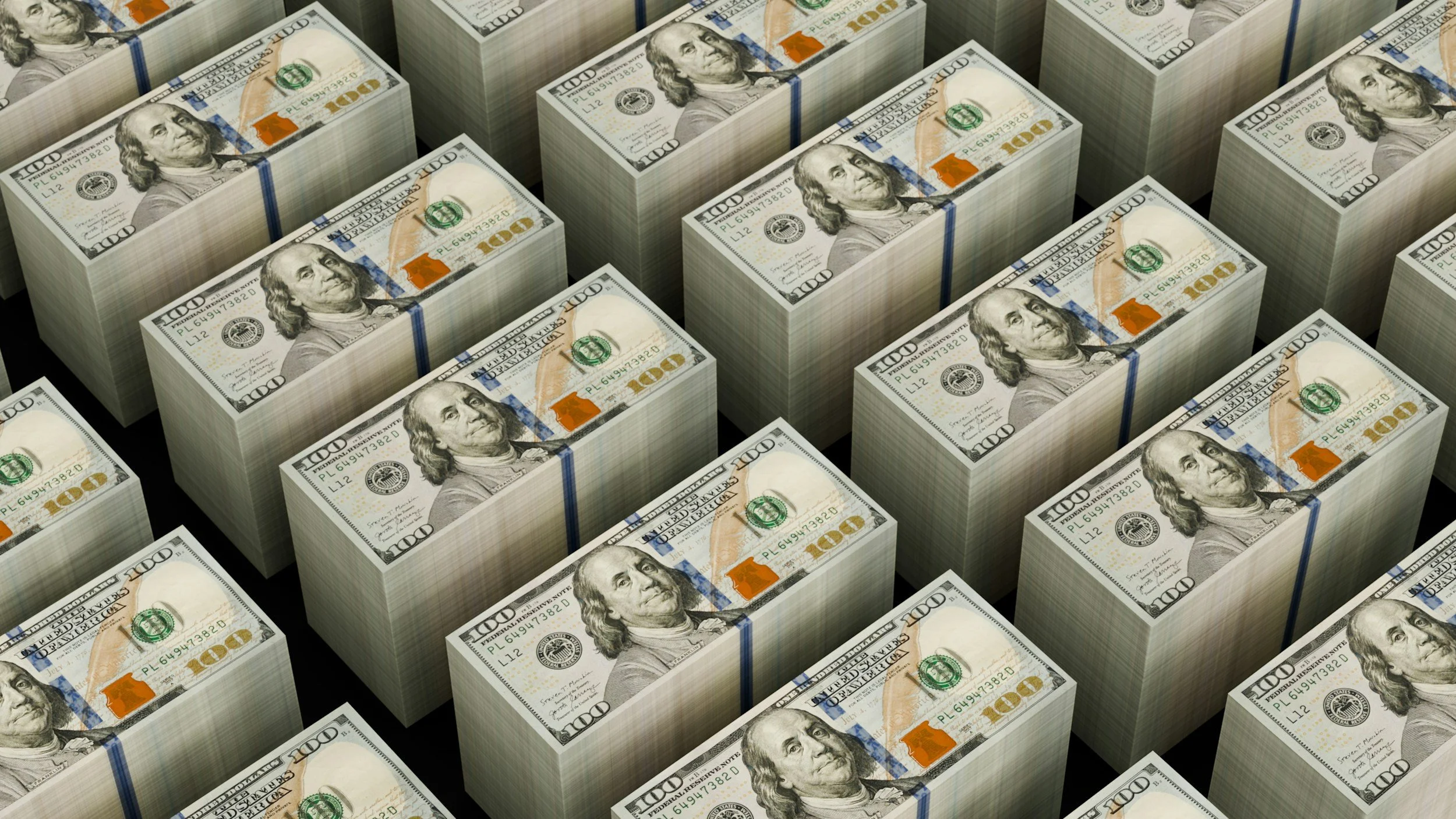
What’s in it for us?
First off, I’m not a communist. Nor am I a socialist in the traditional sense of the word. I’m against state control of business and industry. Capitalism, for all its faults, has built a strong and prosperous America. I can’t think of any monetary system that works as well to motivate and reward people for working hard and improving their quality of life.
That said, when does an excess of capitalism turn a good thing bad? Can a person have too much money for their own good and the good of society?
As inequality spirals out of control, the answer is clearly yes. Things have gone much too far, and we need to make dramatic changes to our economic system to keep us from slipping further into oligarchy.
Much has been written about the negative effects of inequality. But I wanted to ask myself a different question. What are we getting in return for creating so many billionaires? Do they really help society? Do they make us wealthier, happier, and freer? More stable and secure? Do their fortunes improve our lives or actually make them worse?
Let’s take look at some of the traditional arguments about the ways that billionaires contribute to the good of our society.
1. They create jobs. When billionaires own companies, they operate like any other business. It’s helpful to remember that in nearly all businesses, employees are a cost center, not a profit center. The truth is that most companies don’t want to hire you unless they absolutely have to. They can make more money by firing you – offshoring your work, using robotics, or replacing you with AI. As far as wages go, the less they pay you, the greater their profits. And if they can game the system to deny you benefits, all the better. In summary, the whole system is set up to benefit the “job creators” and not the workers. Billionaire-owned businesses don’t create jobs as much as they create profits, and we all know where 100 percent of those profits will go.
2. They give a lot to charity. Warren Buffet and Bill and Melinda Gates have pledged to give away 50% of their wealth. That’s commendable, but they’re outliers. The average billionaire gives away only four percent of their wealth. Forty percent of them give away less than one percent. People working near the poverty level pay a much larger percentage of their income in taxes than the average billionaire gives to charity.
3. They launch ventures the public sector can’t or won’t. I would argue just the opposite. Elon Musk isn’t going to Mars, at least not without government help. The scientific and financial hurdles are just too great. Like building the Interstate Highway system in the 1950s and 60s, projects like these require a national, or better yet, an international, effort.
4. They teach us that anyone can be rich in America. You just need to work hard, save up, spend less, and make sound financial decisions. While that’s still possible, every year, it gets harder for people to rise above their economic starting points. Social mobility in America has been declining for decades. In the 1940s, 90% of Americans made more than their parents. Today, that number has shrunk to half. According to the Brookings Institute, “The “rags to riches story is much more common in Hollywood than on Main Street.” Only 6 percent of children born to parents with family income at the very bottom move to the very top.” Or as John Steinbeck said, “. . . the poor see themselves not as an exploited proletariat but as temporarily embarrassed millionaires.” While the reality is that most wind up as permanently embarrassed debtors.
5. They pay most of our taxes. It’s true the top one percent pay up to 40 percent of our federal taxes, but they also pay a smaller percentage of taxes than the average middle-class person. More importantly, the greatest source of income for the ultra-wealthy doesn’t come from income; it comes from capital gains and interest income from stocks and bonds, which, in a well-managed portfolio, are taxed at 15%. If you make between 50,000 and 105,000 a year, your tax rate is quite a bit higher – 22%. Additionally, the rich paying such a large percentage of federal taxes is a not necessarily a good thing – they pay more in taxes because they have such a large share of the money!
That’s the so-called good side of wealth concentration. Now we can turn to the more problematic side.
1. “Power is always dangerous. It attracts the worst and corrupts the best.” This warning given by Ragnar Lothbrok in The Vikings, is timeless. And since money is the main source of power in today’s world, the richer you are, the more likely your wealth will corrupt you. Not everybody succumbs, but many do. I shouldn’t have to argue this point. We’ve known about hubris since the ancient Greeks, and it seems to be a feature of human nature. In the worst case, you end up with a class of people who think they’re above the law (the Epstein class). They can use their massive wealth to manipulate politicians, banks, and the legal system and break the law without fear of consequences.
2. Wealth buys too much political power. What good is democracy when politicians only respond to the wishes of their wealthy donors and not to the wishes of their constituents? A review of voting records by members of our Congress bears out this reality. We the People have been replaced by We the Wealthy.
3. After about 100K, money doesn’t make you happier. After you make around $100,000 a year, the happiness you get from every extra dollar sharply diminishes – to somewhere around $500,000, where it becomes irrelevant. And if you think that $500,000 is a lot to a billionaire, you don’t understand money or, perhaps, mathematics.
4. Wealth is no longer earned. It’s collected. My personal, albeit cynical, definition of capital is making money while sitting on your butt. Billionaires can invest their money in an S&P index fund and double their money every seven years. Over the course of a lifetime, one billion dollars turns into 16 billion dollars, and if you make it into your 80s, the figure climbs to 64 billion dollars. And all you need do is have an hourly meeting with your financial advisor twice a year and watch the money pile up.
5. They can’t do it alone. Nobody can make a billion dollars on a desert island. Every single person who became wealthy in the United States achieved it only because we have a stable government, dependable infrastructure, well-educated employees, safe municipalities, a functional legal system, and much, much more. To build anything, entrepreneurs and business owners rely on our labor, creativity, and intellectual capacity. Without it, their individual efforts would amount to nothing. They say it takes a village to raise a child. It likewise takes a village to raise a billionaire.
6. Wealth concentration corrupts society. Lastly, the excessive value we place on wealth skews our morality. Most workers – teachers, doctors, nurses, scientists, engineers, police, tradespeople, retail and food-service workers, etc., are mostly judged and rewarded for their contributions to society, while the ultra-wealthy tend to be judged mostly by how much wealth they’ve amassed. Which group are we looking up to and hoping to imitate? Much is made these days of society’s moral decay, but is there any faster means to corrupt a society than to value wealth over character, hard work, talent, energy, and creativity? Values, by their very nature, compete with one another. What’s more important to you – honesty or money? Often, we are forced to choose. And if money always wins a clash in values, then everything else we value is degraded.
The list could go on, but this will suffice. By nature, I’m a philosopher and not a financial expert, politician, or policy wonk – but you don’t have to be a savant to see how far we’ve veered off course. Some kind of reckoning is mandatory, whether a hefty wealth tax, higher capital-gains taxes, mandatory profit sharing for workers, higher wages, universal basic income, guaranteed healthcare, or some combination that benefits workers and resets the tilted playing field that currently empties our pockets and pours millions into the pockets of the ultra-wealthy.
Don’t forget that we’ve been here before. From 1932 until the early 80s, we had very high income-tax rates, a strong regulatory environment, powerful unions, and robust government programs. You could easily claim those were America’s best years: we overcame the Great Depression, won the Second World War, built the strongest middle class in the history of the world, went to the moon, and defeated communism. If we had the will, we could do it again – or we could keep heading down the path of becoming the world’s richest and most corrupt oligarchy, with billionaires leading the way.
It’s getting worse every year, but the path ahead is still our choice. Let’s make it while we still have the chance.